
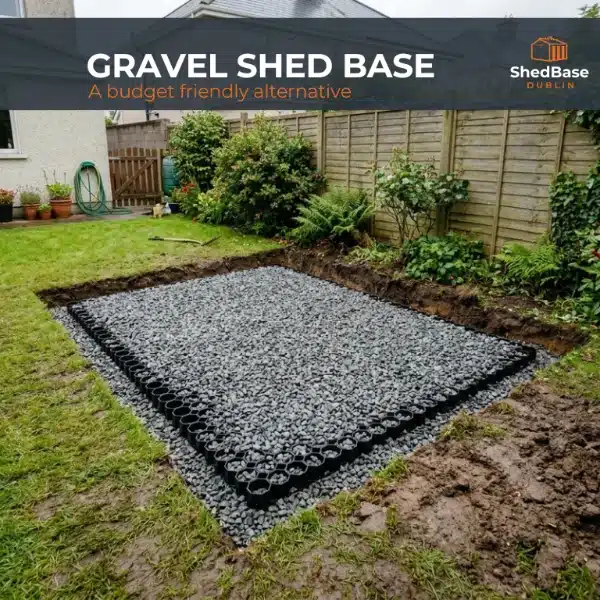
One of the first things we always tell people is that not every single shed in Dublin actually needs a €700 poured concrete pad underneath it, especially if you are just looking for a simple storage solution for the garden.
If you are planning to put up a smaller steel shed just for your lawnmower and a few garden tools then spending a small fortune on the base usually feels a bit daft to most people, and that is exactly where a stabilised gravel shed base comes in. When it is put together properly a gravel base is very fast to build and very affordable while working just as well as any other type of foundation if you are using it for the right type of shed.
For prices around Dublin a proper stabilised gravel base usually costs somewhere between €60 to €90 per square metre and that includes all the labour and the physical materials as well. If you look at a typical 2.4m x 1.8m (8ft x 6ft) storage shed you are looking at paying roughly €260 to €390 in total, which is a fairly huge saving when you compare it against the €430-€645 that a concrete pour would cost for the exact same size.
The only issue is that gravel isn’t always the correct answer for every single job, so we want to explain exactly when it works well and when you should really avoid using it.
What Do We Actually Mean by a Gravel Shed Base?
First off you need to know that a real gravel base is not just a pile of loose stones dumped onto the grass, which is something we actually see people doing all the time and it never ends well because the shed always just sinks straight away.
A proper stabilised gravel foundation is actually built up using a few different layers:
- We always start by excavating the ground down to the right depth
- Then we put down a heavy duty weed membrane which is just landscape fabric that stops weeds from growing up into the bottom of your shed
- After that comes the really structural part which is the 804 hardcore sub-base made of crushed stone that binds itself together
- The final layer is the 20mm clean gravel topping which just acts as the flat surface layer that the shed actually sits on.
The most important word there is stabilised because the 804 hardcore underneath is the part that does all the real structural work for the base. It has lots of small stone dust in it that locks together tightly when we compact it down heavily using a mechanical whacker plate, while the looser clean gravel on top is mainly just there to help with drainage and keep things looking neat.
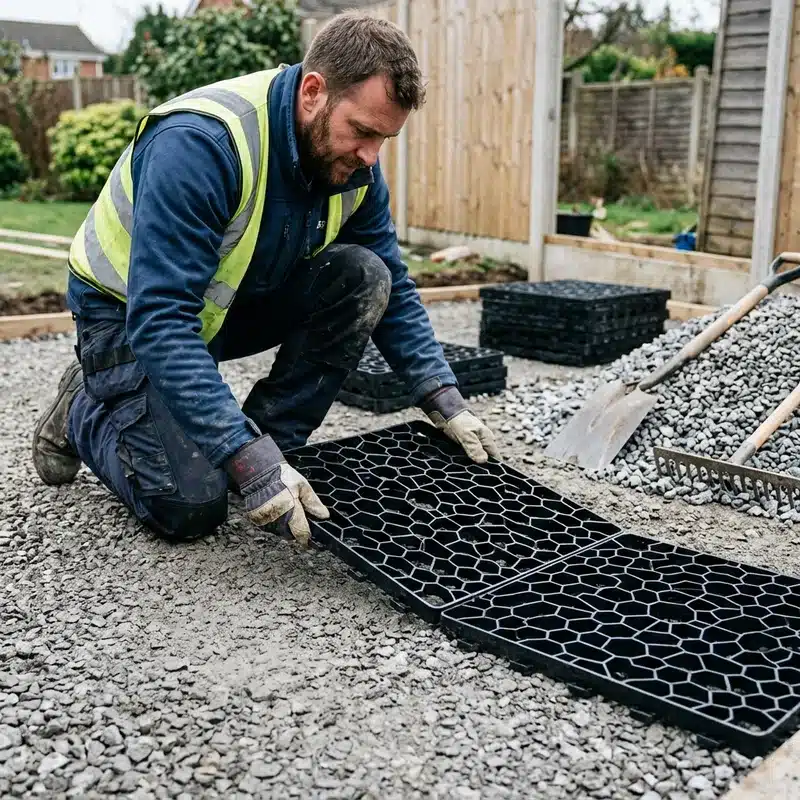
On some specific jobs we also use a modular plastic grid system like the EcoBase panels which we fill up with gravel to give everything even more stability, especially if Sheds Direct Ireland have recommended it for their metal sheds, but a well compacted base without the panels still works perfectly fine for lighter sheds.
When Does a Gravel Base Actually Make Sense?
Like we said earlier gravel is absolutely brilliant for some situations but it is completely terrible for others and we always try to be honest about that.
We find that a gravel base works really well if you are putting up a small to medium sized steel shed up to about 2.4m x 3m (8ft x 10ft), which is the kind of standard garden storage you would buy from Sheds Direct Ireland. It also makes a lot of sense if you are on a strict budget because nobody wants to spend €700 putting a base under a shed that only cost them €400 to buy in the first place.
It is also a great option if you think you might want to move the shed somewhere else in a few years time because gravel can just be raked flat and covered with soil, whereas concrete has to be smashed up with a jackhammer.
On the other hand gravel is completely the wrong choice if you are building an insulated timber garden office or a heavy workshop because the heavy weight will cause the floor to flex and the whole building will settle unevenly, so you really have to use concrete for those.
You also shouldn’t use gravel for big sheds over about 8 square metres or if you are planning to store very heavy lawnmowers or gym equipment, and it’s also a bad idea if your garden has very heavy clay soil without any drainage because the water will just pool up and make the gravel sink over time.
We actually have a full shed base materials guide that you can look at to compare all the different base options if you still aren’t totally sure what you need.
The Process of Putting a Gravel Base Together in Dublin
It is a very fast job for our team and for most average sized gardens a gravel base only takes about half a day from start to finish.
We start by marking the shed out and digging down about 150mm deep, though we sometimes have to go a bit deeper if the ground is very soft. We work a lot out around Swords and Malahide where the ground can sometimes be a strange mix of clay and old fill dirt, so we just have to evaluate it as we go along.
Once the hole is dug we cover the whole area with the heavy-duty landscape fabric to completely block out the weeds from coming up later on, and then we spread out about 100mm of the 804 hardcore across the whole area.
This hardcore layer has to be compacted down very carefully using a proper whacker plate because if you don’t do this part right the base will inevitably settle unevenly during the wet winter months, so we never skimp on the compaction process.
The final step is just spreading out the layer of 20mm clean gravel on top and raking it perfectly flat while checking nothing is out of place with a spirit level, so the shed sit perfectly plumb. Also you can always check the actual planning rules over on citizensinformation.ie if you are worried about needing permission for garden structures in Ireland.
The best part about the whole thing is that because there is no wet concrete involved the shed installers can put the shed straight on the exact same afternoon if you want them to.
How Gravel Deals with Rainfall and Poor Drainage
Everybody knows that Dublin gets a huge amount of rainfall every year so how your shed base handles the water is actually very important.
The good thing about a gravel base is that it is naturally entirely permeable, which means the rain water just passes straight down through the stones and into the ground beneath rather than sitting around the edge of your shed in a big puddle.
When you use concrete the water often just runs off the sides and pools around the base unless you have put in specific drainage channels, so gravel is actually much better for drainage as long as the ground underneath isn’t solid clay.
If you do have heavy clay soil but you still really want to use gravel to save some money, we go a bit deeper on the dig-out and lay a more generous bed of 804 hardcore underneath. That extra stone acts as a soakaway and keeps the gravel surface stable, even after a wet Dublin winter.
What Are the True Costs for a Gravel Base?
To make things easier to compare here is roughly what the costs look like when you factor in all the materials and the labour.
| The Size of the Shed | The Estimated Area | The Cost of a Gravel Base | The Cost of a Concrete Base | Amount You Save |
|---|---|---|---|---|
| 6ft x 4ft (1.8m x 1.2m) | Around 2.2 m² | Between €130 and €200 | Between €220 and €330 | Roughly 40% |
| 8ft x 6ft (2.4m x 1.8m) | Around 4.3 m² | Between €260 and €390 | Between €430 and €645 | Roughly 40% |
| 10ft x 8ft (3m x 2.4m) | Around 7.2 m² | Between €430 and €650 | Between €720 and €1,080 | Roughly 40% |
As the table shows you are saving about 40% of the cost compared to pouring concrete no matter what the size of the shed is, which is obviously very significant when you are trying to keep the costs down on a garden project.
The only reasons that price might creep up slightly is if you live in one of those terraced houses in Dublin 7 or Dublin 9 with no side access at all, because having to push wheelbarrows of stone right through someone’s house just takes hours and adds a lot to the labour costs.
Using the modular EcoBase panels will also add about €25-35 per square metre extra to the materials cost, and of course dealing with very heavy clay soil usually adds a bit as well. You can definitely see a better breakdown of how we price things on our shed base cost guide.